Autologous fibroblast micrografts beat a hyaluronic-acid skin booster in one small 12-month trial.
A randomized open-label controlled study of 40 patients reported greater 12-month gains in wrinkle scores and skin elasticity with autologous fibroblast micrografts than with a hyaluronic-acid skin booster, with only mild short-lived swelling and redness reported in both groups. The study is intriguing but still small, open-label and technique-dependent, so broader replication matters before this becomes mainstream planning.
Reviewed for the Dagan Edit
Share quietly
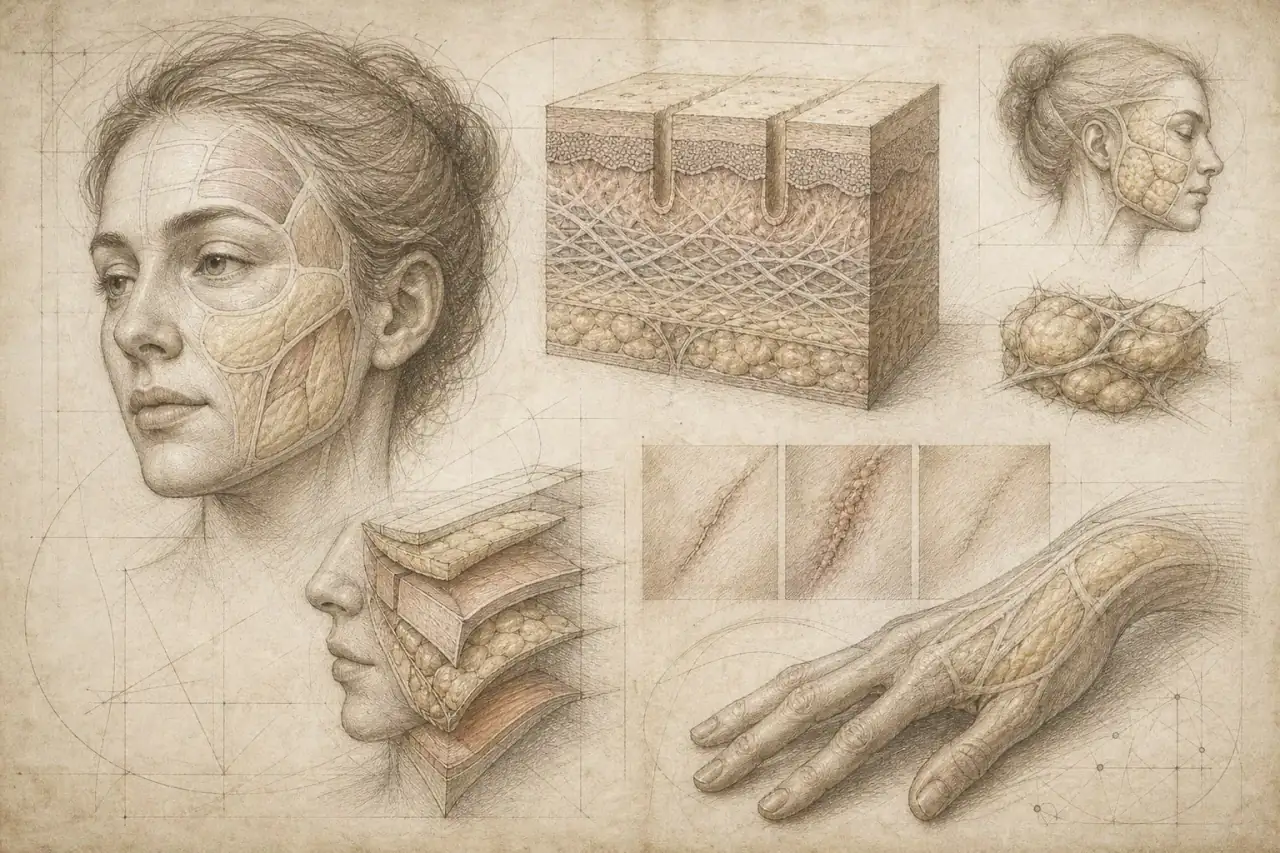
Renaissance-style regenerative skin study representing fibroblast and collagen-support research; not an actual patient result
The report, in context
What this development means—and what it does not.
A randomized open-label controlled study of 40 patients reported greater 12-month gains in wrinkle scores and skin elasticity with autologous fibroblast micrografts than with a hyaluronic-acid skin booster, with only mild short-lived swelling and redness reported in both groups. The study is intriguing but still small, open-label and technique-dependent, so broader replication matters before this becomes mainstream planning.
Inclusion is not an endorsement; treatment suitability, product safety and postoperative care require individualized guidance from a qualified clinician.
Madison Avenue · New York City
Bring the question into a clinical conversation.
A consultation connects general educational context to an individual examination, reasonable options, limitations, and recovery.