A split-face trial suggests adjunct skincare may improve some picosecond-laser photoaging outcomes.
In a randomized evaluator-blinded split-face study published July 23, 2026, a 755-nm picosecond alexandrite laser improved photoaging measures, and the side assigned to a branded adjunct skincare regimen showed greater wrinkle and texture gains. It is useful signal-level evidence for peri-procedure skin support, but the single-center design, photoaging focus and company-linked regimen mean clinicians should avoid treating one post-laser routine as universally superior.
Reviewed for the Dagan Edit
Share quietly
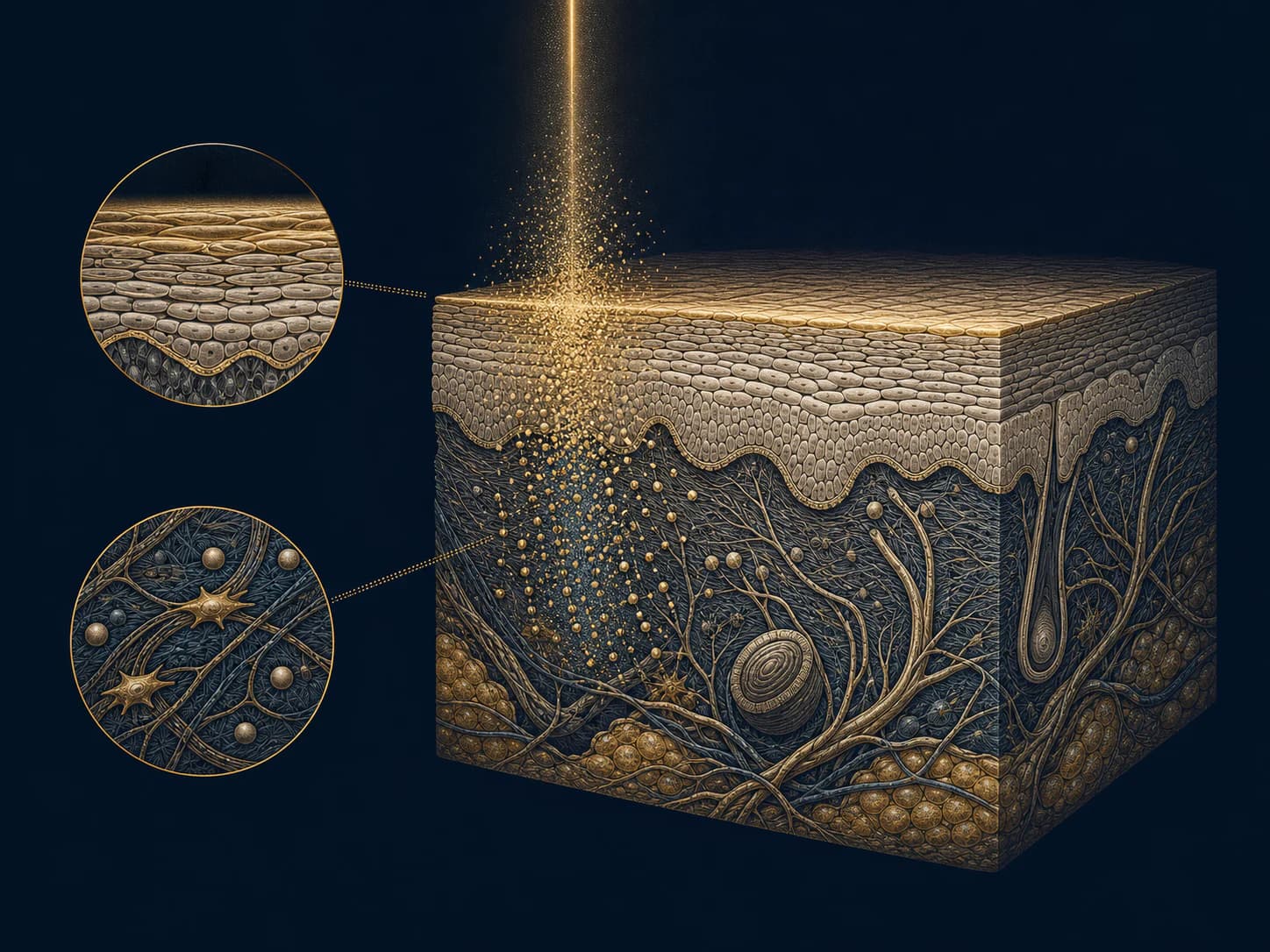
Editorial cutaway illustration of picosecond laser energy meeting skin layers with cellular insets; not a patient result
The report, in context
What this development means—and what it does not.
In a randomized evaluator-blinded split-face study published July 23, 2026, a 755-nm picosecond alexandrite laser improved photoaging measures, and the side assigned to a branded adjunct skincare regimen showed greater wrinkle and texture gains. It is useful signal-level evidence for peri-procedure skin support, but the single-center design, photoaging focus and company-linked regimen mean clinicians should avoid treating one post-laser routine as universally superior.
Inclusion is not an endorsement; treatment suitability, product safety and postoperative care require individualized guidance from a qualified clinician.
Madison Avenue · New York City
Bring the question into a clinical conversation.
A consultation connects general educational context to an individual examination, reasonable options, limitations, and recovery.