
High heels move load forward.
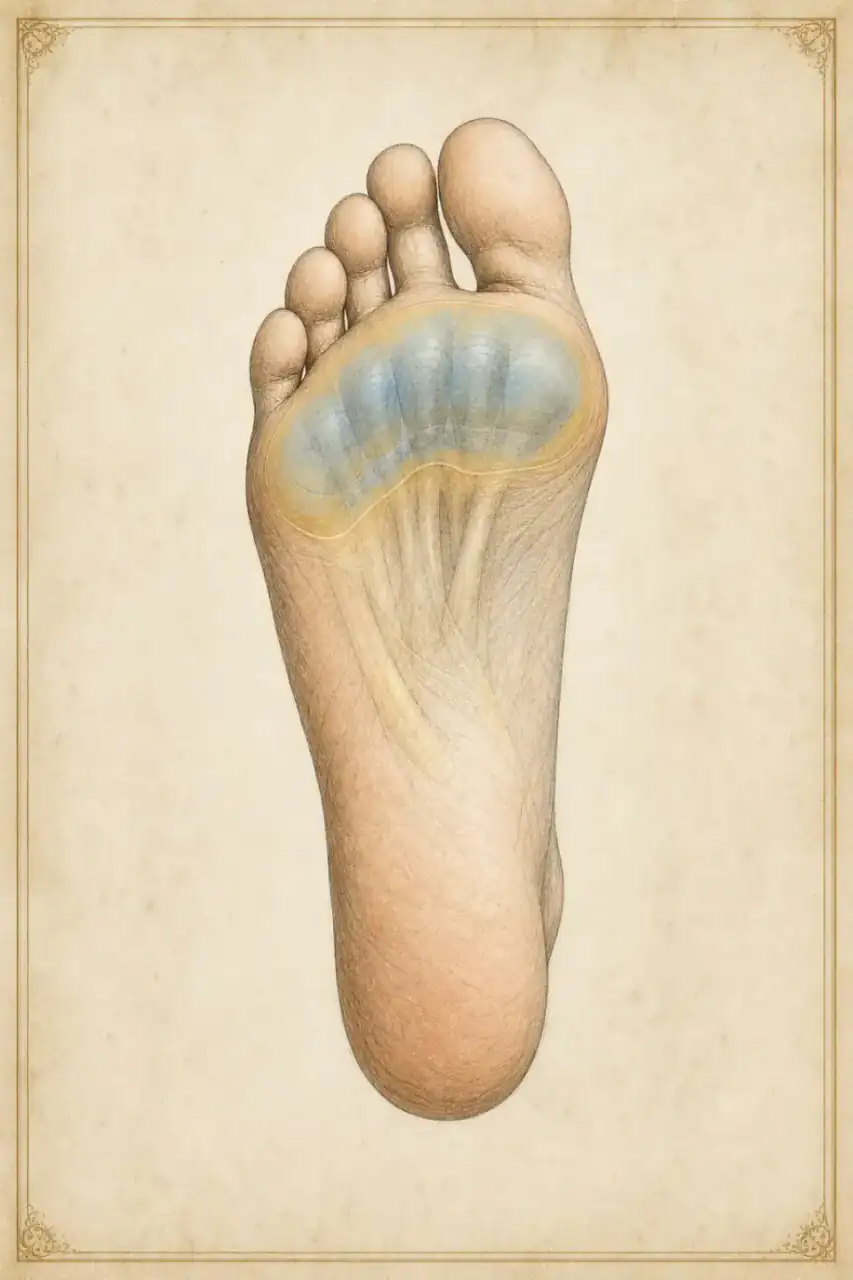
Heel elevation concentrates more force beneath the metatarsal heads. The plantar fat pad cushions that region, but pain can have several causes and should not be diagnosed from footwear alone.
Forefoot · comfort · informed choice
An anatomy-led consultation about ball-of-foot discomfort, conservative care and the limited evidence for off-label hyaluronic-acid filler beneath the metatarsal heads.
Schedule a consultation
The clinical edit · diagnosis before design
The original pamphlet becomes a clearer conversation: why the forefoot hurts, what should be tried first, what an off-label filler proposal means, and where the evidence stops.
Heel elevation concentrates more force beneath the metatarsal heads. The plantar fat pad cushions that region, but pain can have several causes and should not be diagnosed from footwear alone.
A wider toe box, lower heel, metatarsal pad, orthotic, activity change or foot-specialist assessment may address the source without an injection.
A small study suggests possible short-term benefit for selected patients, but foot augmentation is not FDA approved and the FDA recommends against using filler to increase foot fullness.
A safer sequence
Each step is designed to clarify the diagnosis and preserve the option to stop before an unnecessary procedure.
Map the exact location, trigger, gait pattern and possible medical causes.
Review footwear, padding, orthotics and appropriate specialist care.
Discuss FDA status, limited evidence, product, risks and emergency planning.
Make a shared decision and arrange follow-up rather than promising a result.
Dagan MD · Interactive procedure monograph
Each chapter pairs the clinical story with a changing visual essay—original anatomical studies where precision helps and public-domain Renaissance masterworks where art says it better.
An anatomy-led consultation about ball-of-foot discomfort, conservative care and the limited evidence for off-label hyaluronic-acid filler beneath the metatarsal heads. High heels shift load toward the forefoot, where the metatarsal heads and plantar fat pad help absorb pressure. Candidacy and planning require consultation.
The ball of the foot is a load-bearing system made up of the metatarsal heads, plantar fat pad, skin, nerves, vessels, tendons and supporting ligaments. High heels shift more load toward this region, but pain can also come from callus, stress injury, nerve irritation, arthritis, biomechanics or another diagnosis. Candidacy and planning require consultation.
Examine the forefoot, pressure points, footwear pattern and gait rather than treating pain from the name alone. Discuss conservative measures—including shoe modification, metatarsal pads, orthotics and activity changes—before an injection pathway. If off-label hyaluronic-acid filler is still considered, document the exact product, amount, tissue plane and emergency plan. Candidacy and planning require consultation.
Tenderness, pressure, bruising, redness and swelling may occur after injection and can temporarily change walking comfort. Avoid high heels and concentrated forefoot pressure until the treating clinician confirms that activity can resume. Bruising, redness, swelling, pain, tenderness, itching or rash. Candidacy and planning require consultation.
Educational information only. These summaries cannot determine candidacy, diagnose a condition or replace an individual medical evaluation.
Portrait · purpose · possibility
The opening portrait keeps the discussion grounded in the feature, proportion or concern this service is designed to evaluate.
Overview
High heels shift load toward the forefoot, where the metatarsal heads and plantar fat pad help absorb pressure. The name Stiletto Lift™ describes a consultation about that pressure-related discomfort—not an FDA-approved foot procedure. The FDA has not approved dermal filler to increase foot fullness and recommends against that use. A small, open six-month study of 15 adults reported improvement after hyaluronic-acid filler beneath the metatarsal heads, but it does not establish broad safety, ideal dosing or long-term effectiveness.
Dagan MD · Procedure monograph
An anatomy-led consultation about ball-of-foot discomfort, conservative care and the limited evidence for off-label hyaluronic-acid filler beneath the metatarsal heads.
Tal Dagan, MD, FACS · 420 Madison Avenue, Suites 503–505 · New York, NY 10017 · (212) 585-3242 · myfacesurgeon.com
Overview
High heels shift load toward the forefoot, where the metatarsal heads and plantar fat pad help absorb pressure. The name Stiletto Lift™ describes a consultation about that pressure-related discomfort—not an FDA-approved foot procedure. The FDA has not approved dermal filler to increase foot fullness and recommends against that use. A small, open six-month study of 15 adults reported improvement after hyaluronic-acid filler beneath the metatarsal heads, but it does not establish broad safety, ideal dosing or long-term effectiveness.
Prepare
A well-planned procedure begins before treatment day.
Procedure
The ball of the foot is a load-bearing system made up of the metatarsal heads, plantar fat pad, skin, nerves, vessels, tendons and supporting ligaments. High heels shift more load toward this region, but pain can also come from callus, stress injury, nerve irritation, arthritis, biomechanics or another diagnosis. The cause should be identified before any injection is considered.
Techniques
Technique is selected only after examination, goals and safety considerations are aligned.
Evidence + status
This is the chapter the original pamphlet was missing: the regulatory status and the limits of the available research.
Recovery
The early view is never the final result. Follow-up allows swelling, sensation, scars and contour to be assessed over time.
Risks + alternatives
Every procedure has limitations and alternatives. Consultation should make both clear.
Questions
Start with the indication: the precise anatomical or functional finding the procedure is intended to treat—and why that approach fits better than the alternatives.
A consultation may be reasonable for an adult with reproducible ball-of-foot discomfort who wants to understand why it occurs and has realistic expectations about conservative care. Filler candidacy is a separate and much narrower question: foot augmentation is not FDA approved, the FDA recommends against it, and the available clinical evidence is limited. Pain without a diagnosis, poor circulation, neuropathy, active infection or suspected stress injury argues for medical or foot-specialist evaluation rather than filler.
No. The FDA has not approved dermal fillers to increase fullness of the feet and recommends against that use. Any proposed foot injection must be described as off-label, with the limited evidence and location-specific uncertainty discussed plainly.
A small open study followed 15 adults with high-heel-related metatarsalgia for six months and reported improved pain and longer heel-wearing time after hyaluronic-acid filler beneath the metatarsal heads. The study had no control group and was too small and short to establish broad safety, ideal dosing or long-term benefit.
There is not enough reliable foot-specific evidence to promise a 9-to-18-month duration. Longevity may vary with product, anatomy, pressure, activity and individual response.
The first step is diagnosis. Shoe modification, metatarsal padding, orthotics, activity changes and podiatry or orthopedic care may address the cause without introducing filler.
Educational information only. Not medical advice. Consultation is required for individualized recommendations. Candidacy, technique, risks, recovery and alternatives require an individual examination. Illustrations do not predict or guarantee a result.
Educational information only. Candidacy, technique, risks, recovery and alternatives require an individual examination. Illustrations do not predict or guarantee a result.
Madison Avenue · New York City
Meet Dr. Dagan in person or begin with a virtual consultation.
Schedule a consultation
 DAGAN MD